
W. Eugene Smith: The Relentless Eye
The images displayed in this article are used under the principles of fair use for educational and non-commercial purposes. They are presented solely to illustrate the artistic work and provide historical and educational context. All rights to the original images remain with their respective copyright holders. If you are a rights holder and believe your work has been used inappropriately, please contact us and we will address your concerns promptly.
Image Sources:
- Center for Creative Photography (University of Arizona)
- Smithsonian’s National Portrait Gallery and the Center for Documentary Studies at Duke University.
W. Eugene Smith: The Relentless Eye
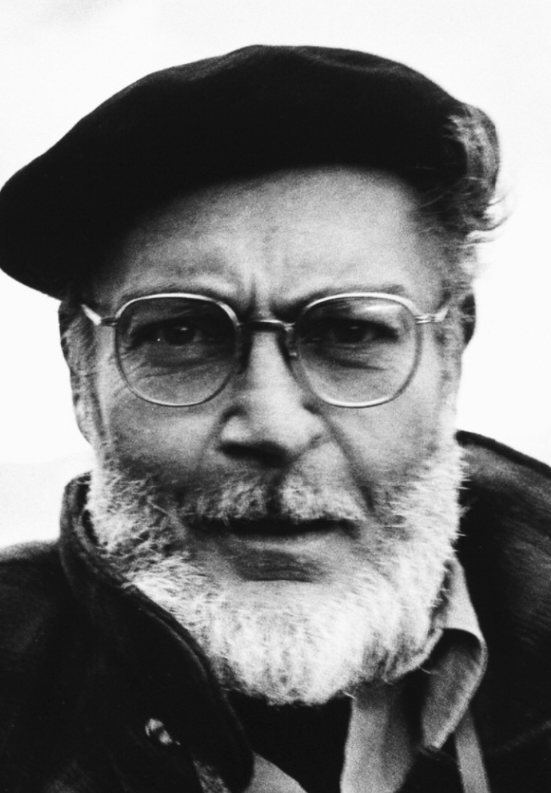
In the annals of 20th-century photography, few names resonate with the same mix of reverence and awe as William Eugene Smith. To those who knew him, he was not just a photographer—he was a man possessed. Possessed by the need to tell stories with honesty, by the belief that photography could reveal truth, and by an almost self-destructive obsession with perfection. His life, much like his pictures, was one of stark contrasts: light and shadow, hope and despair, genius and torment.
Beginnings in Wichita
Smith was born in Wichita, Kansas, in 1918. His earliest years were shaped by tragedy when his father, a wheat broker ruined by the Depression, committed suicide. Smith, just fourteen, carried that loss like a hidden scar. Yet in the aftermath, he found refuge in photography. His mother, recognizing the boy’s obsession, gave him his first camera. By high school he was already contributing to local newspapers, showing a precocious eye for drama and detail.
From the start, Smith’s photographs carried a sense of urgency. He wasn’t content with recording events; he wanted to peel back layers, to reveal the marrow of human experience. This intensity carried him to New York, then he enrolled at Notre Dame on scholarship but soon abandoned academia for the camera. In 1939, at just twenty-one, he began shooting for Newsweek and then for LIFE magazine, which would become both his launchpad and his battlefield.
Into War
World War II became Smith’s crucible. As a combat photographer for LIFE, he landed with U.S. Marines in the Pacific. His images from Saipan, Guam, and Okinawa remain some of the most searing photographs of the war. He captured soldiers not as propaganda icons, but as exhausted, terrified young men. His most famous wartime image—an American soldier cradling a wounded infant on Saipan—embodied both horror and humanity in a single frame.
But Smith was no detached observer. He was wounded by mortar fire in Okinawa in 1945, shrapnel tearing through his face and jaw. For two agonizing years he underwent reconstructive surgeries and rehabilitation. Many believed his career was over. But Smith was unyielding. He said, “I still have my camera. That’s enough.”
The LIFE Years
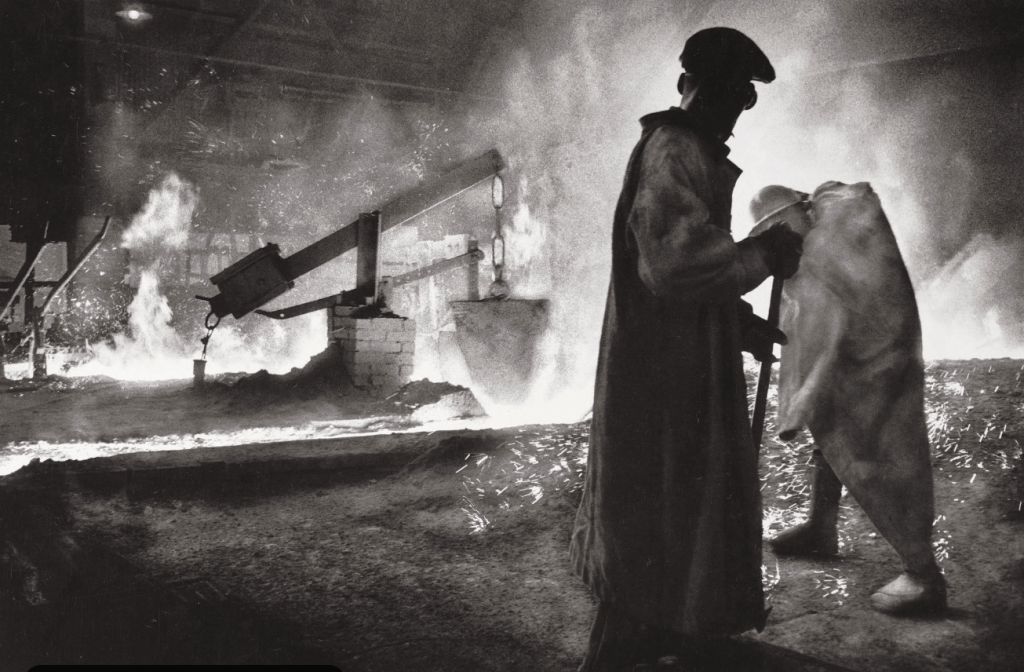
Smith returned to LIFE with an almost fanatical drive. His postwar photo essays revolutionized the form. Before him, photojournalism often meant a scatter of unrelated images accompanied by text. Smith insisted the pictures themselves could carry the narrative weight. He spent months, sometimes years, shaping essays that read like visual symphonies.
Among his masterpieces was “Country Doctor” (1948), a profile of Dr. Ernest Ceriani in rural Colorado. Smith followed Ceriani as he trudged through snow to deliver babies, stitched wounds under dim light, and consoled grieving families. The photographs were intimate, unsparing, yet deeply compassionate. Readers of LIFE were stunned: this was not just documentation—it was storytelling at its most human.
Other seminal essays followed: “Nurse Midwife,” about Maude Callen bringing medical care to impoverished Black families in South Carolina; “Spanish Village,” an unvarnished portrait of poverty in Franco’s Spain; and “A Man of Mercy,” about Albert Schweitzer in Africa. Each essay bore Smith’s hallmark: long immersion, relentless editing, and an insistence on emotional truth.
Yet Smith’s perfectionism made him a nightmare for editors. He would deliver hundreds of rolls of film, demand total control over sequencing, and argue endlessly with LIFE’s staff. Deadlines were missed, tempers flared. In 1954, after a particularly bitter clash over his Schweitzer essay, Smith quit the magazine for good.
The Jazz Loft
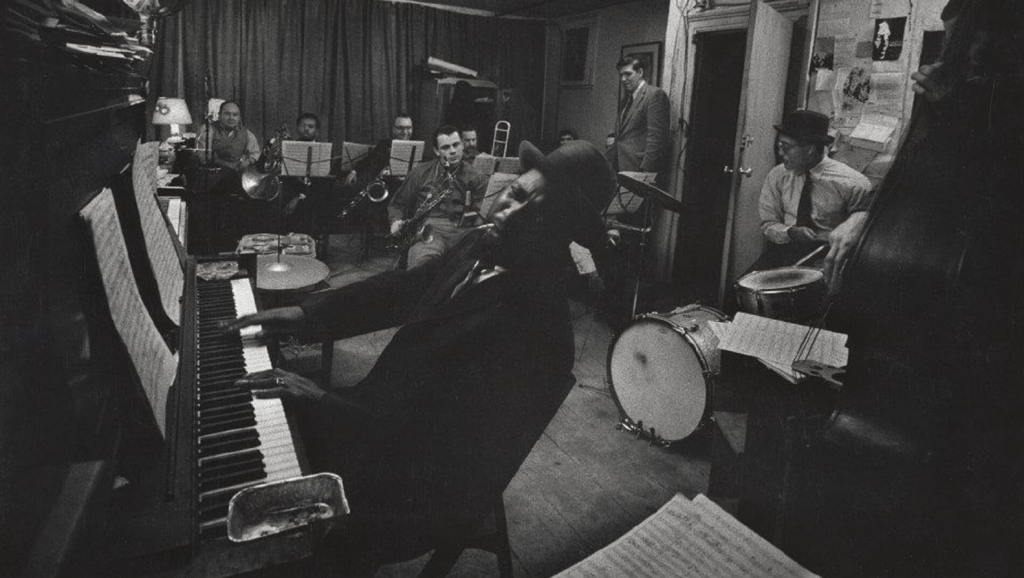
Leaving LIFE did not tame Smith’s demons. If anything, it freed them. He retreated to a loft on Sixth Avenue in New York’s flower district, a chaotic space crammed with prints, negatives, and tape recorders. For nearly a decade, the loft became a legendary sanctuary for jazz musicians—Thelonious Monk, Charles Mingus, Zoot Sims—who gathered to play deep into the night. Smith recorded it all, amassing nearly 4,000 hours of reel-to-reel tapes and 40,000 photographs.
This period, later known as the “Jazz Loft Project,” was both exhilarating and destructive. Smith was broke, addicted to amphetamines and alcohol, his health declining. Yet he was also creating one of the most remarkable archives of American culture ever assembled. For Smith, the loft was a place where he could fuse sound and image, exploring rhythm, improvisation, and chaos in a way no assignment editor would have allowed.
Minamata
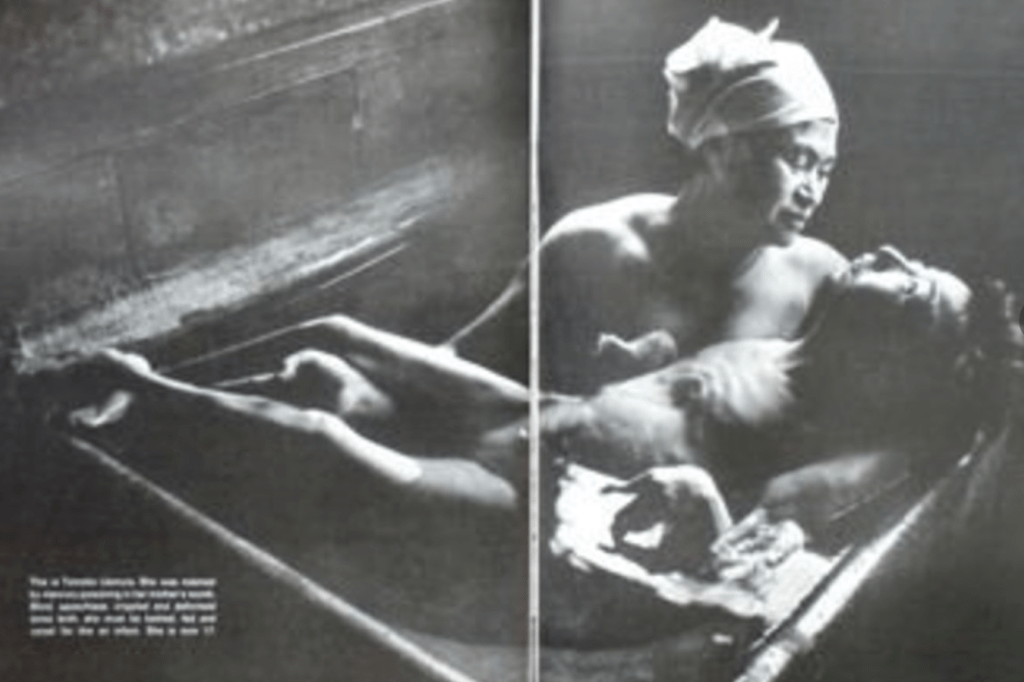
In the early 1970s, Smith found his last great subject: the Japanese fishing village of Minamata, poisoned by industrial mercury pollution. Together with his partner Aileen Mioko Sprague, he lived among the villagers, documenting their suffering. His photographs showed twisted bodies, blind eyes, and families ravaged by disease.
The most iconic image from Minamata is “Tomoko in Her Bath” (1972), showing a mother cradling her severely deformed daughter in a dark wooden tub. The picture, almost sculptural in its composition, became one of the most powerful environmental photographs ever taken. But it came at a cost: Smith was beaten nearly to death by company thugs hired to intimidate him. His health never fully recovered.
Decline and Legacy
By the late 1970s, Smith was frail, nearly blind in one eye, and still battling addictions. He died in 1978 at age 59, leaving behind an unfinished autobiography, piles of disorganized negatives, and a reputation as both genius and madman.
Yet his legacy is monumental. W. Eugene Smith elevated photojournalism into an art form. He believed the camera was not just a tool, but a moral instrument. He once wrote: “I am constantly torn between the need to improve the world and the need to enjoy the world. This makes it very hard to plan the day.”
His work endures not because it is beautiful—though it often is—but because it is honest. He showed war not as glory but as agony, poverty not as statistics but as faces, and humanity not as an abstraction but as individuals struggling, suffering, and persevering. Every frame carried his relentless conviction that photography mattered, that truth mattered.
-Charlie Hutchins
Watch the movie Minamata on Amazon Prime