
Diane Arbus: Seeing the Margins of Society
Introduction
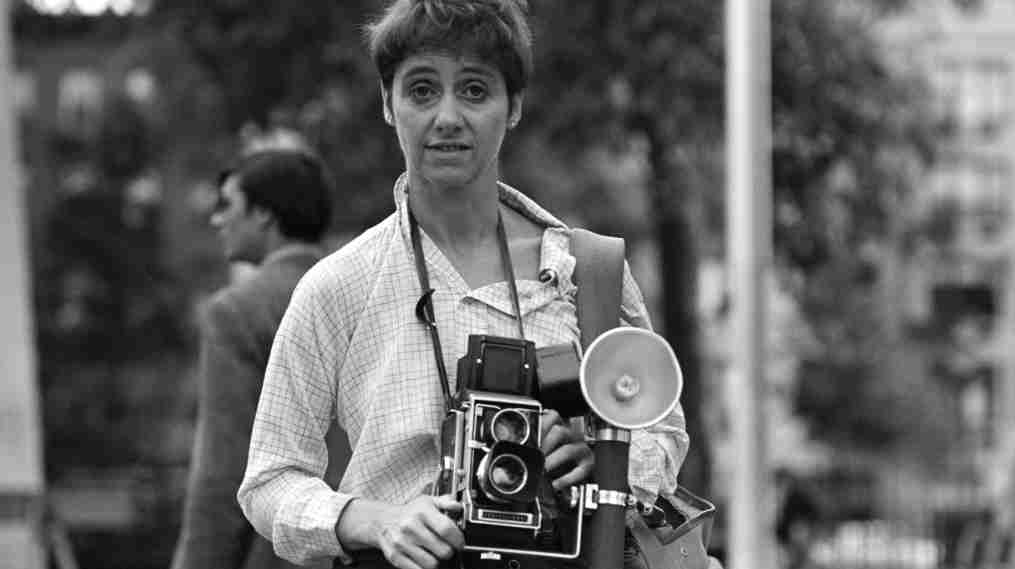
Diane Arbus (1923–1971) was an American photographer who became one of the most influential and controversial figures in twentieth-century photography. Known for her stark, uncompromising portraits, Arbus explored subjects at the edges of social norms: carnival performers, transgender people, nudists, people with disabilities, and suburban families alike. She revealed what she described as “the gap between intention and effect,” making the camera a tool for showing vulnerability, identity, and humanity.
Arbus’s work bridged documentary and fine art, challenging the aesthetic conventions of the mid-20th century and influencing generations of photographers. This essay explores her life, her approach to photography, her tools of choice, and her most notable works, including where they were taken.
Early Life and Career
Born Diane Nemerov in New York City in 1923, she grew up in an affluent family that owned a Fifth Avenue department store. At age eighteen she married Allan Arbus, with whom she initially pursued fashion photography. Together, they produced commercial images for Vogue and Glamour. However, Diane soon grew disillusioned with the artificiality of fashion. In the late 1950s, she began working independently, influenced by her mentor, Lisette Model, who encouraged her to photograph “what is taboo.”
By the early 1960s, Arbus was using a Rolleiflex twin-lens reflex camera, a tool that became strongly associated with her breakthrough work. The Rolleiflex’s square 6×6 format and waist-level viewfinder allowed her to engage directly with her subjects while composing. Later in the decade, she expanded her practice with a Mamiya C-series twin-lens reflex (“Mamiya Flex”), which offered interchangeable lenses. This flexibility gave her more creative control over perspective and framing, particularly in her later portraits. The combination of these two cameras defined her visual language during the most important years of her career.
Artistic Approach and Themes
Arbus’s images are instantly recognizable for their unsettling honesty. Whether shot on her Rolleiflex or Mamiya, her photographs share a direct, frontal quality. She often posed subjects against simple backdrops or in ordinary surroundings, giving equal visual weight to circus performers, suburban families, or marginalized individuals. Her choice of cameras supported this vision:
- The Rolleiflex reinforced her intimate, eye-level engagement with subjects.
- The Mamiya C-series gave her more technical options while preserving the square format that had become central to her style.
Her photographs are not voyeuristic but instead confrontational: they force the viewer to acknowledge the subject’s presence and dignity, even if uncomfortable.
Recurring themes in her work include:
- Identity and performance: Her subjects often present themselves in ways that blur the line between who they are and how they wish to be seen.
- Normality vs. difference: Arbus photographed both the unconventional (giants, dwarfs, drag queens) and the seemingly conventional (middle-class families, children in Halloween costumes), suggesting that the boundary between normal and abnormal is fragile.
- Human vulnerability: Many portraits reveal fragility, loneliness, or a raw openness that unsettles the viewer.
Notable Works and Their Locations
1. Child with Toy Hand Grenade in Central Park, New York City (1962)
Shot with her Rolleiflex, this is arguably her most famous image. It shows a young boy, Colin Wood, holding a toy grenade, his face contorted in tension. The photo epitomizes Arbus’s ability to transform an ordinary moment into something charged with psychological intensity.
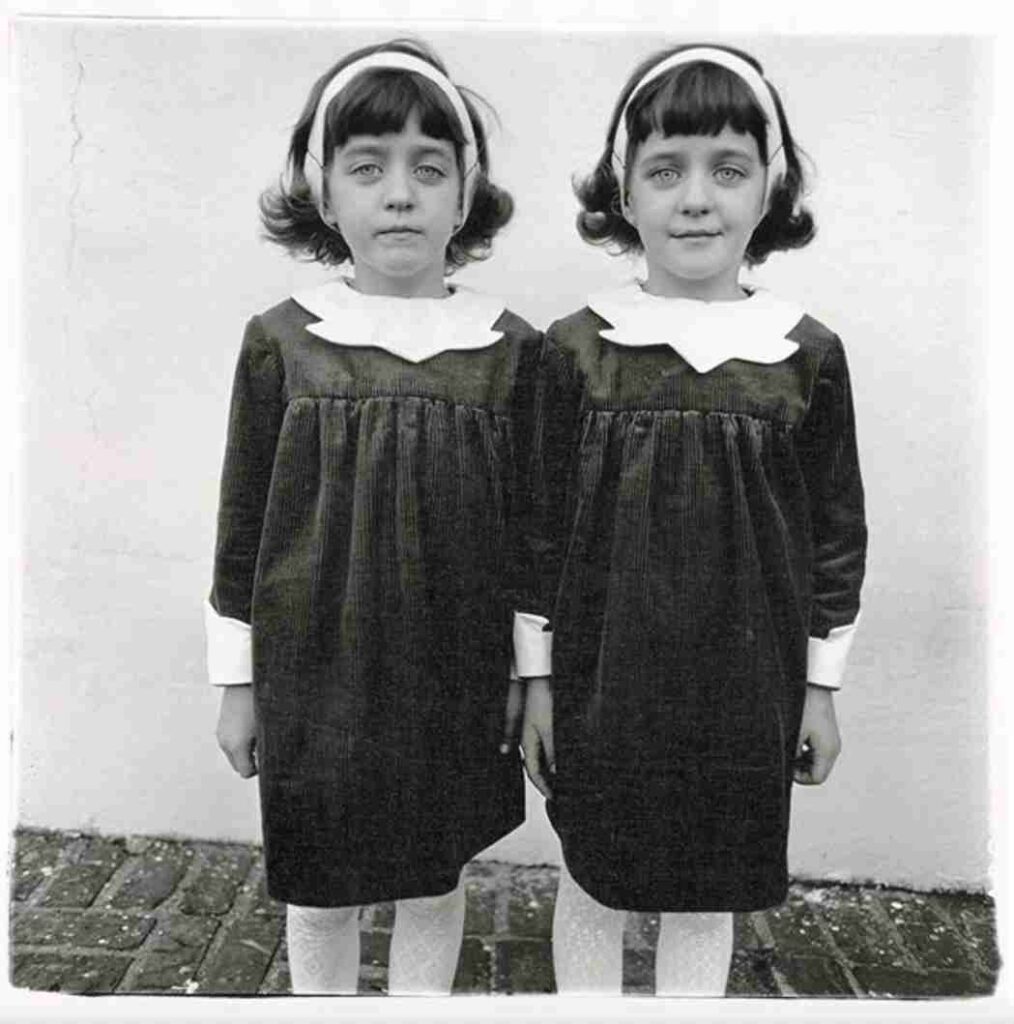
2. Identical Twins, Roselle, New Jersey (1967)
This portrait of Cathleen and Colleen Wade, identical twins in matching dresses, became iconic. The girls’ nearly symmetrical appearance contrasts with their subtly different expressions—one smiling slightly, the other unsmiling—conveying individuality within sameness.
3. A Young Man in Curlers at Home on West 20th Street, New York City (1966)
Taken with her Rolleiflex, this portrait of a man preparing to go out—captured in curlers and makeup—is one of her best-known explorations of gender and performance.
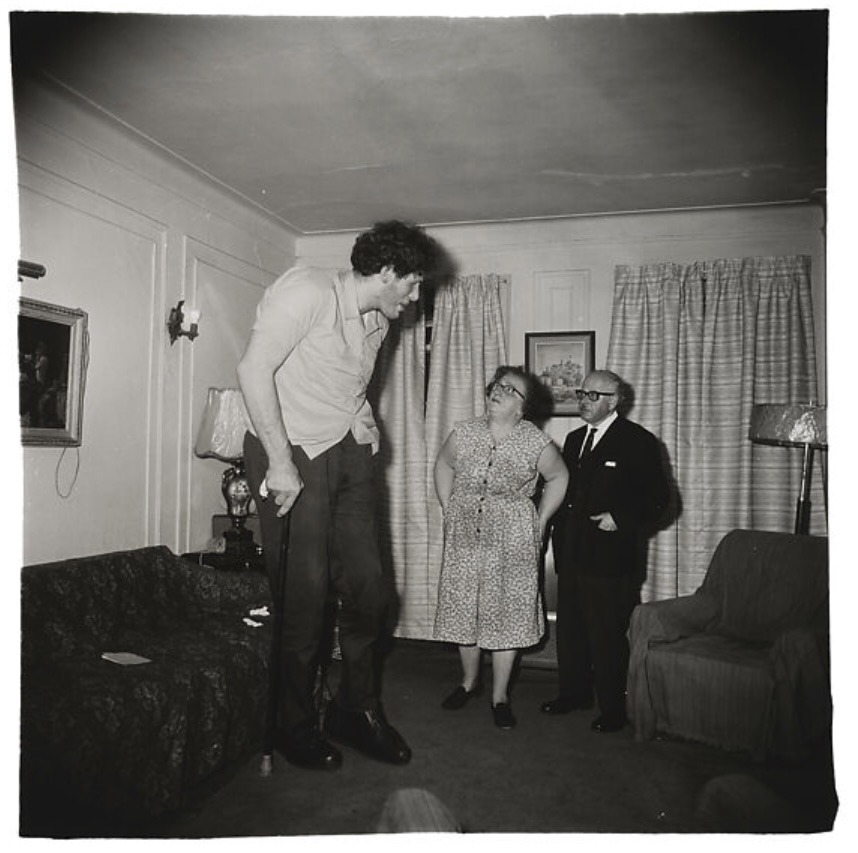
4. A Jewish Giant at Home with His Parents in the Bronx, New York (1970)
Created during her later years, likely with the Mamiya C-series, this haunting image shows Eddie Carmel towering over his elderly parents in their modest Bronx apartment. The photograph dramatizes both his extraordinary stature and the ordinariness of the domestic setting.
5. A Family on Their Lawn One Sunday in Westchester, N.Y. (1968)
This suburban tableau depicts a couple relaxing on their manicured lawn, surrounded by symbols of leisure: a television, a car, and their children.
6. A Young Brooklyn Family Going for a Sunday Outing, New York City (1966)
This picture shows a working-class family on the street, parents staring into the camera while their children look distracted.
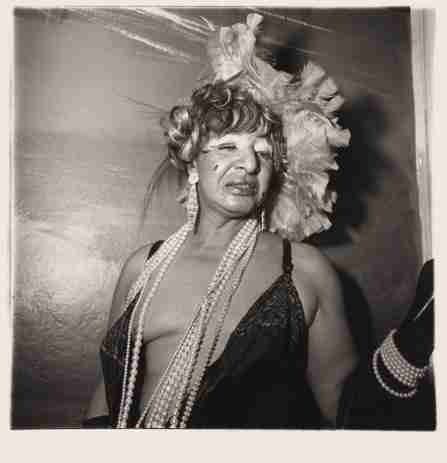
7. Transvestite at a Drag Ball, New York City (1967)
Arbus frequently attended drag balls in Manhattan, photographing participants with dignity and curiosity. These images documented LGBTQ+ communities long before broader cultural recognition.
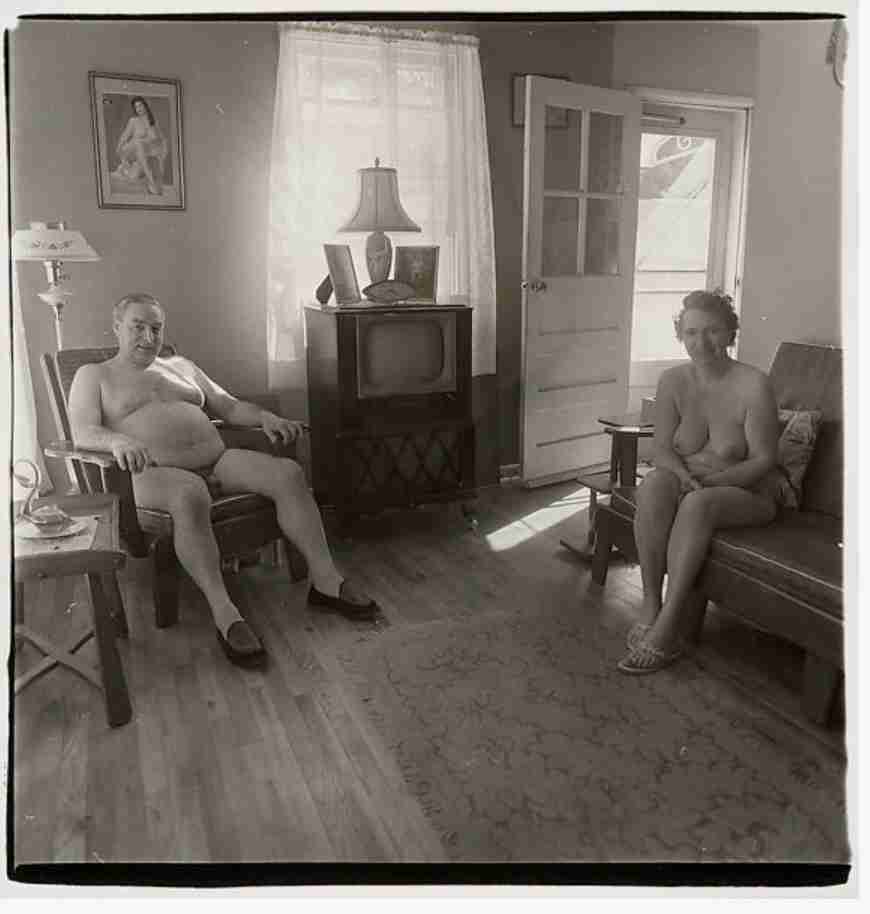
8. Retired Man and His Wife at Home in a Nudist Camp, N.J. (1963)
Taken in a New Jersey nudist colony, this portrait of an older couple is disarming in its straightforwardness.
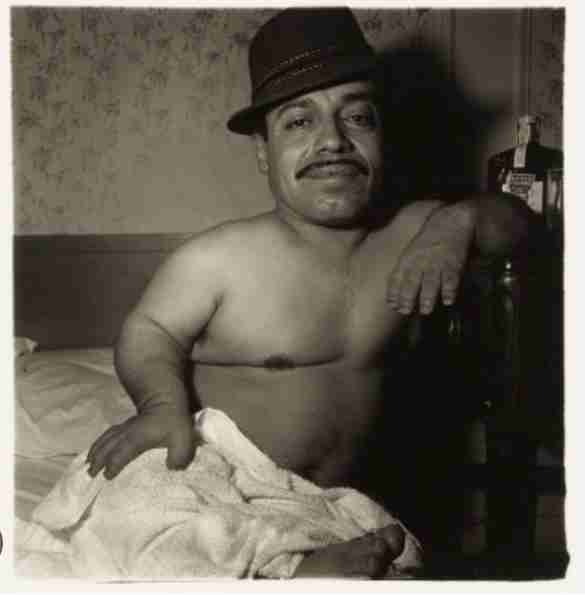
9. Mexican Dwarf in His Hotel Room, N.Y.C. (1970)
This intimate portrait of a circus performer reclining on a hotel bed suggests both theatricality and vulnerability.
10. Tattooed Man at a Carnival, Maryland (1970)
Arbus was drawn to carnival culture, photographing performers with both curiosity and respect.
Influence and Legacy
In 1967, Arbus’s work was included in the landmark exhibition New Documents at the Museum of Modern Art, alongside Garry Winogrand and Lee Friedlander. The show marked a turning point in American photography, shifting focus from idealized images to the rawness of ordinary life.
Her work polarized critics: some praised her for confronting difficult truths, while others accused her of exploitation. After her death in 1971, her reputation grew with the posthumous publication Diane Arbus: An Aperture Monograph (1972), which became one of the best-selling photography books of all time.
Her equipment choices also shaped her legacy. The Rolleiflex’s intimacy and the Mamiya’s flexibility combined to define the distinctive square-format images that remain her hallmark.
Arbus’s influence can be seen in later generations of photographers—Nan Goldin, Cindy Sherman, and Mary Ellen Mark, among others—who also turned their lenses toward marginalized communities and themes of identity.
Conclusion
Diane Arbus transformed photography by making visible the lives of people who were often unseen or misunderstood. Through her direct, compassionate, and sometimes unsettling portraits, she revealed both the strangeness of the ordinary and the ordinariness of the strange. Her notable works—whether taken in Central Park, Roselle, the Bronx, or suburban Westchester—remain touchstones in photographic history, inviting viewers to question what is normal, what is different, and what it means to look at another person with honesty.
Her use of both the Rolleiflex and Mamiya Flex cameras was central to this achievement. The Rolleiflex enabled intimacy and immediacy, while the Mamiya extended her technical range, giving her greater compositional flexibility. Together, these tools shaped a body of work that continues to challenge and inspire more than fifty years after her death.
– By Charlie Hutchins
The images displayed in this article are used under the principles of fair use for educational and non-commercial purposes. They are presented solely to illustrate the artistic work and provide historical and educational context. All rights to the original images remain with their respective copyright holders. If you are a rights holder and believe your work has been used inappropriately, please contact us and we will address your concerns promptly.