
March 8 Field Trip: Explore the C-44 Reservoir & Witness Nature’s Power in Action!
Join us on March 8 for a visit to the C-44 Reservoir and Stormwater Treatment Area (STA), a significant environmental restoration site officially designated as an STA by the South Florida Water Management District Governing Board on May 9, 2024.
The C-44 Reservoir and Stormwater Treatment Area is the first component of the multi-billion dollar Indian River Lagoon-South Project.
Spanning over 6,000 acres, the C-44 STA was created to improve water quality but has also become a thriving habitat for wildlife such as wading birds, ducks, and alligators. The area offers exciting recreational opportunities, including hiking, biking, wildlife viewing, photography, and, in the future, limited-entry waterfowl and alligator hunts managed by the Florida Fish and Wildlife Conservation Commission (FWC).
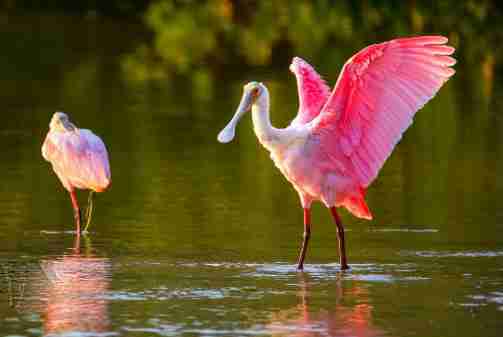
Visitors to the C-44 Reservoir and Stormwater Treatment Area can observe and photograph an impressive variety of bird species, including majestic sandhill cranes, swift-flying snail kites, striking great blue herons, and elegant great egrets. The area is also home to mottled ducks, vibrant roseate spoonbills, graceful white pelicans, and towering wood storks, along with a diverse array of migratory shorebirds that make seasonal appearances.
After registering for this field trip below, you must also <Click Here> to register with the Martin Audubon “Happenings – Registration” web page Also, they require a Waiver Form to be filled out and brought to the entrance: < Click Here > for the form, or you can get a form at the entrance to fill out. Please arrive before 8AM since public access is controlled by Martin Audubon and after 8AM the gate will be closed to the public. If you have further questions, please call Val Bormanis at 561 994-0363.
Time & Location: Mar 08, 2025 – 8:00 AM – 12:00 PM
C-44 Reservoir & STA, SW Citrus Blvd (CR 726), Indiantown, FL 34956, USA
Directions:
From Stuart, take Kanner Highway (SR 76) south to SW 96th St (CR 76A) and turn right heading west. After 2.5 miles, SW 96th St (CR 76A) ends at SW Citrus Blvd (CR 726), turn left. Heading south, continue on SW Citrus Blvd (CR 726) for 8.8 miles to the yellow gated entrance on the right.
From Palm City, take Martin Highway (SR 714) west over Florida’s Turnpike to SW Citrus Blvd (CR 726) in Palm City and turn left. Heading south, continue on SW Citrus Blvd (CR 726) for 13.9 miles to the yellow gated entrance on the right.
Don’t miss this chance to explore one of Florida’s most impressive environmental achievements and enjoy its abundant wildlife.
Register For The Field Trip
Know Before You Go
Photographing birds at the C-44 Reservoir and Stormwater Treatment Area requires a mix of technical expertise, patience, and an understanding of wildlife behavior. Here are the key skills a photographer should develop before heading out to capture the stunning bird species found in the area:
1. Mastering Camera Settings for Bird Photography
- Fast Shutter Speed: Birds move quickly, so practice using shutter speeds of 1/1000s or faster to freeze motion, especially in flight.
- Adjusting Aperture: A wide aperture (f/5.6 – f/8) helps isolate the bird from the background while keeping it sharp.
- Managing ISO: Learn to balance ISO settings for different lighting conditions—higher ISO for early morning or overcast days.
- Autofocus Modes: Use Continuous Autofocus (AI-Servo/AF-C) to track birds in motion.
2. Composition & Framing Techniques
- Rule of Thirds: Position birds slightly off-center for a more dynamic shot.
- Eye-Level Perspective: Whenever possible, photograph birds at eye level for a more engaging image.
- Negative Space: Leave room in the frame for birds in flight to create a sense of movement.
- Foreground & Background Awareness: A clean, uncluttered background makes the subject stand out.
3. Understanding Bird Behavior for Better Shots
- Predicting Movements: Observe birds to anticipate when they will take off, land, or interact with their environment.
- Recognizing Feeding & Nesting Patterns: Knowing when and where birds feed or rest improves your chances of capturing great moments.
- Being Patient & Stealthy: Birds startle easily—move slowly and wait for the right shot.
4. Using the Right Equipment Effectively
- Telephoto Lenses: A 300mm or longer lens is essential for capturing birds from a distance without disturbing them.
- Tripod or Monopod: Helps stabilize shots, especially with heavy telephoto lenses.
- Beanbag Support: Useful when shooting from a car or a low angle.
5. Adapting to Different Lighting Conditions
- Golden Hour Photography: Early morning and late afternoon provide the best light for capturing vibrant colors.
- Backlighting for Silhouettes: Experiment with backlit shots at sunrise or sunset for dramatic effects.
- Shooting in Overcast Conditions: Cloudy skies provide soft, even lighting, reducing harsh shadows.
6. Ethical & Responsible Wildlife Photography
- Respect Distance: Use a long lens instead of approaching too closely.
- Avoid Flash: Bright flashes can disturb birds and alter natural behavior.
- Stay on Designated Paths: Protect habitats by sticking to trails and observation areas.
7. Post-Processing Skills
- Editing in RAW: Shooting in RAW format allows better control over exposure, color correction, and detail enhancement.
- Cropping & Composition Adjustments: Helps refine framing and remove distractions.
- Noise Reduction: Useful for cleaning up high-ISO shots taken in low light.
Bonus Tip: Research & Plan Ahead
- Check recent bird sightings at C-44 Reservoir to know which species are active.
- Bring weather protection for your gear, as conditions near water can be unpredictable.
- Use apps like Merlin Bird ID or eBird to help identify species on the spot.